Monday, February 16, 2009

Ten ways to make low-carb healthy.

Cutting Back on "Bad" Carbs
By: Reader's Digest

Thanks to the popularity of low-carb diets, nearly half of Americans say they are watching the amount of carbohydrates they eat. If you're among them, we're providing these 10 tips so your carb control is healthy and wise!

Bear in mind that there is a huge difference between Cheese Doodles and oatmeal. Both might be categorized as carbs, but their benefits are on opposite ends of the health spectrum. In the last chapter, we detailed the benefits of “good carbs.” Now it's time to explain what a “bad carb” is. Here's the simplest answer: white flour, refined sugar, and white rice. More broadly, any food made primarily of a carb that has been processed in such a way as to strip out ingredients that hinder quick and easy cooking. Why are refined carbs a problem? Easy: They digest so quickly that they cause blood sugar surges that lead to weight gain and other health troubles.Here are some ways to avoid troublesome carbs while still getting the fuel you need for good health. Carb-counting meets common sense, right this way...

1. Tell the waiter to hold the bread. At almost every restaurant, your meal starts with a basket of rolls, breads, and crackers made from white flour. If it's not put on the table, you won't eat any. Or, if you really need something to nibble on, ask if they have whole wheat varieties.

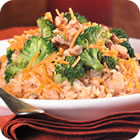
2. At Chinese restaurants, ask for brown rice, and limit how much you eat to one cup. In fact, some Chinese restaurants have started offering to swap a vegetable for the rice in their combo dinners, knowing that many people are on low-carb diets. At home, always cook brown rice instead of white. Brown rice hasn't been processed and still has its high-fiber nutrients.

3. Instead of bread, use eggplant slices to make a delicious sandwich. Broil two thick slices of eggplant until brown, then add mozzarella and tomato, olive oil and basil to one slice, suggests Nicole Glassman, owner of Mindful Health in New York City. Top with the other slice of eggplant and broil again until the cheese melts.

4. Wrap your food in lettuce leaves. Yes, skip the bun, tortillas, and bread slices and instead make a sandwich inside lettuce leaves. Glassman suggests going Mexican with a sprinkle of cheddar cheese, salsa, and chicken; Asian with sesame seeds, peanuts, bean sprouts, cut up green beans, and shrimp with a touch of soy sauce; or deli style with turkey, cheese, and mustard.

5. Buy old-fashioned snacks in kidsize bags. Truth is, pretzels, tortilla chips, potato chips, and cookies are mostly bad carbs, made primarily of refined flour, sugar, salt, and/or oil. You want to remove as many of these foods from your daily eating as you can. But if you can't live without them, buy them in small bags--1 ounce is a typical “lunch box” size--and limit yourself to just one bag a day.


6. Break yourself of your old spaghetti habits. Almost everyone loves a big bowl of pasta, topped with a rich tomato sauce. The tomato sauce couldn't be better for you; the spaghetti, however, is pure carbohydrate. While spaghetti is fine to eat every now and then, for those sensitive to carbs or wishing to cut back on their noodle intake, here are some alternatives to the usual spaghetti dinner:


  • Here's the easiest choice: Switch to whole wheat pasta. It is denser than traditional pasta, with a firm, al dente texture similar to what you'd get in Italy.

  • Grill vegetables such as eggplant, zucchini, bell peppers, and onion and slice them into long, thin pieces. Mix up and pour your spaghetti sauce over the vegetables for a delicious and immensely healthy meal.

  • Substitute spaghetti squash for the pasta. Boil or microwave the squash until soft, then scoop out the seeds and pull the strands of squash from the shell with a fork.

  • Top with your favorite sauce and a grating of real Parmesan.

  • Try healthy whole grains as a replacement for pasta. Spaghetti sauce goes better than you'd expect on brown rice, barley, chickpeas, and such.

7. Cut up 1-ounce portions of cheese and divvy up 1-ounce portions of nuts into tiny snack bags. Now you have a handy snack at the ready.

8. Eat potatoes boiled with the skin on. The effect of potatoes on blood sugar depends on how the potatoes are prepared. No need to unspud yourself completely! Also, new potatoes tend to have fewer simple carbs than other types of potatoes.

9. Eat lightly of the new low-carb products. More than 1,000 low-carb products were introduced in 2003, but the FDA has yet to publish any guidelines as to what “low carb” really means. Instead, many new “low carb” foods are to carbcutting what “low fat” cookies were to fat-cutting: just a new way of pitching foods high in calories and low in nutrient value. In fact, Consumer Reports found that many packaged low-carb foods are actually higher in calories than their regular counterparts. For instance, a serving of Keto's low-carb Rocky Road ice cream has 270 calories, almost double the calories found in many regular ice creams and twice as much fat.

10. Think lightly of the new net-carb measurements. Many of the low-carb weight-loss programs are trying to get their followers to use “net carbs” as the measurement of choice for the appropriateness of a carb food in their diet. This is a measurement of the “bad carbs” left in a food after you adjust for those carb ingredients that don't immediately affect blood sugar. The folks at Atkins Nutritionals say the proper way to measure net carbs is to subtract fiber (as well as sugar alcohols and glycerin, when applicable) from the total carbs listed on the nutrition facts panel of a product. But that's just their version, and that's the problem. “Net carbs” is not a regulated or standardized measurement--manufacturers can define it how they want, and say what they want on product packaging. And there is no science to say that tracking net carbs offers any unique weight-loss benefit.

Friday, January 30, 2009

Health Benefits of Rebounding!!


This is new to me. And the more I read the more I am amazed at the benefits from something so very simple and easy to use. I have unregularly been using mine 2-3 or 5 minutes at a time during my work day. Not doing anything special but lightly bouncing, trying to work my way to more advanced moves. But 3-5 minutes doesnt sound like much but you really can feel it working.
Im going to post some links below so you can read some of the benefits of rebounding. You'll be Amazed and I except you to run out and buy one today !!! :)
Here is some more benefits if you need more convincing:
There are 30 health advantages of regular rebounding, including the following:
It increases the capacity for respiration.
It circulates more oxygen to the tissues.
It establishes a better equilibrium between the oxygen required by the tissues and the oxygen made available.
It causes muscles to perform work in moving fluids through the body to lighten the heart's load.
It tends to reduce the height to which the arterial pressures rise during exertion.
It lessens the time during which blood pressure remains abnormal after severe activity.
It holds off the incidence of cardiovascular disease.
It increases the functional activity of the red bone marrow in the production of red blood cells.
It aids lymphatic circulation, as well as the flow in the veins of the circulatory system.
It encourages collateral circulation.
It strengthens the heart and other muscles in the body so that they work more efficiently.
It allows the resting heart to beat less often.
It lowers elevated cholesterol and triglyceride levels.
It stimulates the metabolism.
It promotes body growth and repair.
It tones up the glandular system, especially the thyroid to increase its output.
It adds to the alkaline reserve of the body which may be of significance in an emergency requiring prolonged effort.
It chemically attains absolute potential of the cells.
It reserves bodily strength and physical efficiency.
It expands the body's capacity for fuel storage and endurance.
It improves coordination through the transmission of nerve impulses and responsiveness of the muscle fibers.
It affords muscular vigor from increased muscle fiber tone.
It offers relief from neck and back pains, headaches, and other pain caused by lack of exercise.
It enhances digestion and elimination processes.
It allows for better and easier relaxation and sleep.
It results in a better mental performance, with keener learning processes.
It curtails fatigue and menstrual discomfort for women.
It minimizes the number of colds, allergies, digestive disturbances, and abdominal problems.
It tends to slow down aging.
It reduces the likelihood of obesity.

Wednesday, January 28, 2009

The Bottom Line

Make sure you click at the end to read the full article... Its great , informative reading.


Choose good carbs, not no carbs. Whole grains are your best bet.
Don't be misled by fad diets that make blanket pronouncements on the dangers of carbohydrates. They provide the body with fuel it needs for physical activity and for proper organ function, and they are an important part of a healthy diet. But some kinds of carbohydrates are far better than others.
The best sources of carbohydrates—whole grains, vegetables, fruits and beans—promote good health by delivering vitamins, minerals, fiber, and a host of important phytonutrients. Easily digested carbohydrates from white bread, white rice, pastries, sugared sodas, and other highly processed foods may contribute to weight gain, interfere with weight loss, and promote diabetes and heart disease.
Read the full article on
carbohydrates.

Harvard School of Public Health Nutrition Source
****************************************************************************
5 Quick Tips
Adding Good Carbs
to Your Diet..


1. Start the day with whole grains. Try a hot cereal, like old-fashioned oats, or a cold cereal that lists a whole grain first on the ingredient list.

2. Use whole grain breads for lunch or snacks. Confused about how to find a whole-grain bread? Read "Separating the Whole Grain from the Chaff" to learn how to spot whole grains in the supermarket.

3. Bag the potatoes. Instead, try brown rice, bulgur, wheat berries, whole wheat pasta, or another whole grain with your dinner. Read "Health Gains from Whole Grains" for a list of whole grains and their health benefits.

4. Choose whole fruit instead of juice. An orange has two times as much fiber and half as much sugar as a 12-ounce glass of orange juice. 5. Bring on the beans. Beans are an excellent source of slowly digested carbohydrates as well as a great source of protein.

Tuesday, January 27, 2009

Begin to Understand how the liver makes glucose


Ok.. lets start with some information :


Diet wars: why low carb's best
January 22, 2009 - 12:35PM
It's official, a low-carb diet is better at burning fat than just cutting calories.
Scientists who were working to find out how diet affects the operation of the liver put 14 overweight people on either a low carbohydrate or low calorie diet.
They found those eating fewer carbs lost almost double the weight over two weeks, and several changes in liver function were identified as part of the reason why.
"Energy production is expensive for the liver," says Dr Jeffrey Browning, assistant professor at the UT Southwestern Medical Centre, in Dallas, Texas.
"It appears that for the people on a low-carbohydrate diet, in order to meet that expense, their livers have to burn excess fat."

The average weight loss for the low-calorie dieters was about 2.2kg, while the low-carb dieters lost about 4.3kg on average.
Dr Browning said the study highlighted how diet could cause a "dramatic change" in where and how the liver was producing glucose - a form of sugar.
Glucose and fat are both sources of energy that are metabolised in the liver and used as energy in the body.
Test subjects on the low-calorie diets got about 40 per cent of their glucose from a substance called "glycogen" - which is made from ingested carbohydrates stored in the liver until needed.
Those on low-carb diets, however, sourced only 20 per cent of their glucose from glycogen as they burned more fat instead of dipping into their reserves.
Dr Browning said the findings offered new hope for targeted non drug-related treatments for obesity and also liver-related disorders such as diabetes, insulin resistance and non-alcoholic fatty liver disease (NAFLD).
"Instead of looking at drugs to combat obesity and the diseases that stem from it, maybe optimising diet can not only manage and treat these diseases, but also prevent them," says Dr Browning.
"Understanding how the liver makes glucose under different dietary conditions may help us better regulate metabolic disorders with diet."
The findings are published in the journal Hepatology.

This story was found at: http://www.theage.com.au/articles/2009/01/22/1232471463939.html

Healthy Low carb

Lets get this started with focusing on a healthy eating habit. Most people think low carb is sitting around eating chunks of fat. And that is the furthest from the truth. Im sure there are ones that have tried that route but how long did would that last just on the being doable side... probably not a lifetime , thats for sure.

To keep myself on track and to inspire or help anyone else , lets take this journey together.

Lets start to see what healthy low carb living is all about. With diabetes on the rise daily in the U.S. we really need to start facing what were eating and start to make changes!!

Look for more to come...............